
Insights
May 04, 2026SMARTGEN
Hot-season rooftop solar: households should start from daytime self-consumption
As electricity demand rises in the hot season, rooftop solar creates the most value when sized around daytime self-consumption.
As electricity demand rises in the hot season, rooftop solar creates the most value when sized around daytime self-consumption.
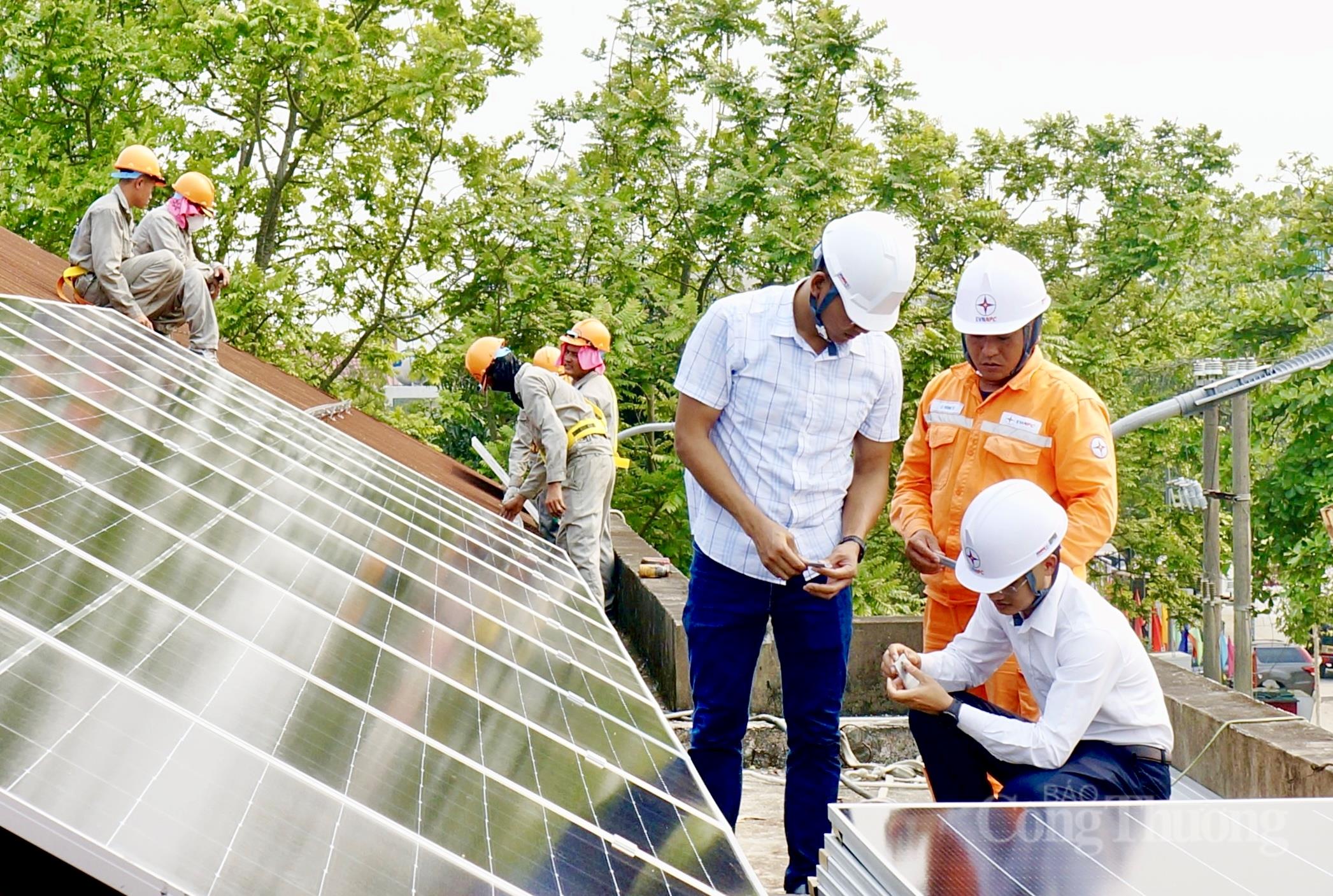
EVN has published an article on the strong rise of rooftop solar in Thanh Hoa during the hot-season peak. The article points to an important shift: installation demand is no longer driven mainly by selling electricity under the former FIT mechanism, but by self-generation and self-consumption to reduce electricity bills.
For SMARTGEN, this is highly relevant to Vietnamese households. In hot weather, air conditioners, pumps, refrigerators, kitchen equipment and cooling devices run more often. Bills rise not only because households use more kWh, but also because they may move into higher blocks of the progressive residential tariff. Rooftop solar should therefore be framed as a bill-management solution, not simply as power-generation equipment.
According to EVN, higher electricity demand in Thanh Hoa has supported rooftop solar growth. The article also notes that current demand is more practical: customers are interested in self-consumption to reduce electricity costs, while businesses and factories benefit because daytime consumption overlaps with PV production. Among households, high-consumption homes, especially those paying more than VND 1 million per month, are also exploring rooftop systems.
The first question should not be how many kWp can fit on the roof. The better question is how much electricity the household can use during the day. If few people are at home in daytime, an oversized system may generate more electricity than the household can use. If the house has air-conditioning, pumps, work-from-home loads, a small business or other daytime equipment, PV can reduce grid purchases more effectively.
In the hot season, PV output is often high when sunlight is strong, which is also when many homes use cooling equipment. With the right design, self-consumed solar electricity can reduce purchases from the grid during high-use periods and make bills more predictable.
Storage can be considered when a family needs evening use, backup power or stable daytime surplus. But for most households, the first step should be a correctly sized PV system based on bills and daytime loads. Storage should strengthen PV value, not make the initial investment unnecessarily heavy.
